

“Control your own destiny or someone else will”
Game: Destiny 2
Expansion: Edge of Fate
Developer: Bungie
Release Date: July 15, 2025
- Campaign: July 15, 2025
- The Desert Perpetual Raid: July 19, 2025
- Ash and Iron Update coming September 9, 2025
Available On: PlayStation 4 & 5, Xbox Series, Xbox One, Steam, Epic Games Store
Reviewed on Xbox Series X. Also Tested on PlayStation 5.
How Do You Begin Again?
After the near-perfect conclusion to Destiny 2’s Light and Darkness Saga with The Final Shape, the future of the franchise felt genuinely uncertain. The climactic 2024 expansion delivered closure to a decade-long journey—defeating the Witness, saying heartfelt goodbyes to beloved characters, and weaving together years of lore and storytelling in a finale that rivaled Avengers: Endgame in scope and emotional weight. For me, and many fellow Guardians, it was the narrative and emotional peak of the series—and for some veterans, a natural conclusion to their journeys and to step away from the franchise.
The Episodes that followed—Echoes, Revenant, and Heresy—struggled to keep that momentum. These post-saga episodes landed with mixed reception, often feeling like narrative filler rather than a bold new direction. Combined with reports of struggles within Bungie—the situation with Marathon, a massive studio restructure, veteran leadership departures, and Sony’s takeover of the studio along with Project Gummy Bears, which was handed to the newly announced PlayStation Studio Team LFG—one question weighed heavily: Was there even a future for Destiny?
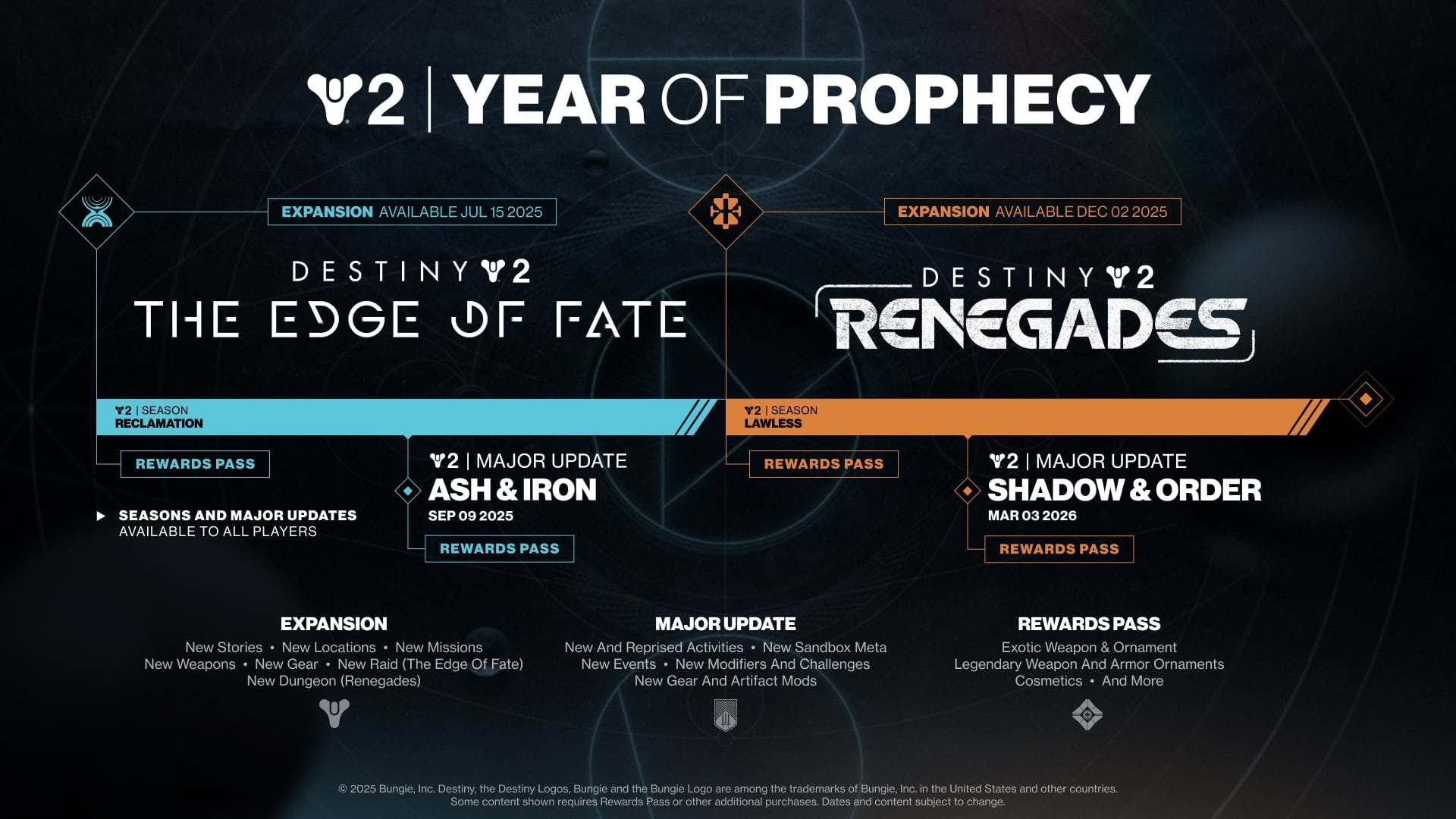
Bungie made their intentions clear when they unveiled the Year of Prophecy roadmap, laying out a clear vision for Destiny 2’s short-, mid-, and long-term future. It signaled a near-total reimagining of Destiny 2 from the ground up, introducing a tiered gear progression system, a new arsenal of weapons and armor, major sandbox changes, and The Portal system—a streamlined interface that unified core gameplay activities. The roadmap also detailed the two major expansions as part of the Year of Prophecy: Project Apollo (now known as The Edge of Fate) and Project Behemoth (officially titled Renegades), a Star Wars-inspired expansion featuring lightsaber-like weapons and an Exotic modeled after Han Solo’s iconic DL-44 blaster.
The studio also promised to finally confront some of the franchise’s longest-standing mysteries: What happened to Maya Sundaresh? What secrets lie on Kepler? And most importantly—who are The Nine, and do they really control our fate?
Now that The Edge of Fate is finally here, I’m happy to say that Bungie delivered on their promise. This expansion feels like Destiny 3 in everything but name—an exceptional blend of soft relaunch and a continuation of all that came before. The Edge of Fate is exactly what this franchise needed.
WARNING: STORY SPOILERS UPCOMING. IF YOU HAVE NOT PLAYED THE CAMPAIGN YET, DO NOT READ FURTHER.
The Narrative, The Characters, and The Nine
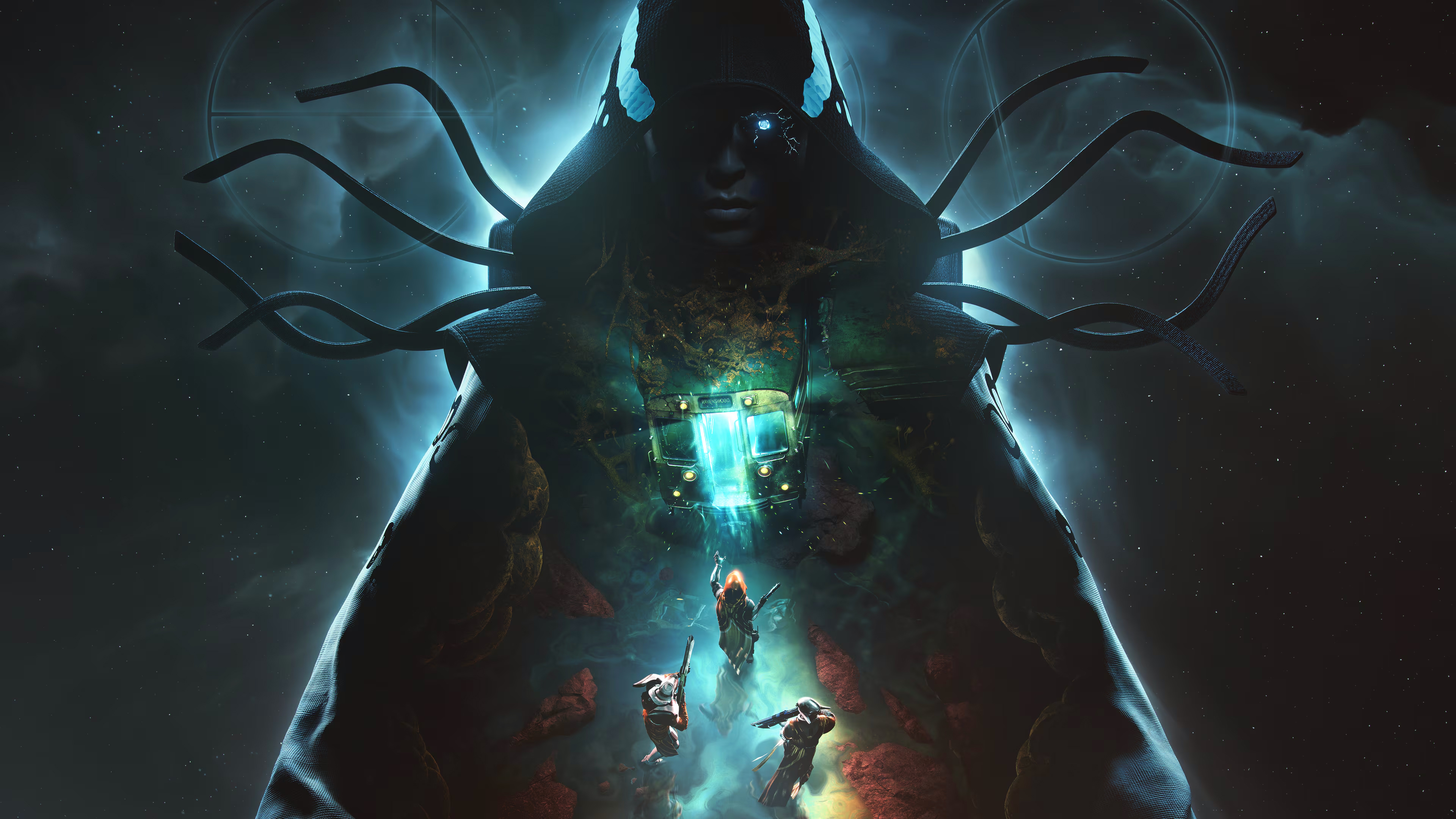
The first thing that surprised me was how immediately engaging The Edge of Fate‘s narrative was, delivering a story that feels deeply personal and intimate—finally placing Ikora at the forefront in a meaningful way as it explores, and even questions, her humanity. The introduction of Lodi, our calm and enigmatic guide who was the central character in the marketing, is easily one of the most compelling new characters the series has introduced in years. His role serves a dual purpose: offering new Guardians a bridge to past expansions while providing longtime players with rich, impactful lore. From the moment Lodi recognizes Ikora—despite being displaced from the 1960s—it’s clear there’s a deeper mystery at play, one that predates even Ikora’s rebirth as a Guardian. A particularly powerful cutscene explores that shared history and offers some insight into why Guardians have no memory of their past lives, nor should they go looking for it, adding emotional weight that genuinely resonated with me.
The Drifter also plays a significant role in the story, showcasing personal growth that goes far beyond his original persona as the jokester who urged us to bank all those motes in Gambit. Orin is present as well, having resigned from her duties as the Nine’s Emissary to aid us in our quest. It’s clear that The Drifter and Orin share a personal history, even engaging in playful banter about Drifter’s endearing relationship with Eris Morn.
Kepler’s biggest immediate threat—the Eliksni House of Exile—served as a solid narrative antagonist for the story being told. Bungie added a fresh twist to encounters with this decade-old foe through the introduction of the Corsair, a new jetpack-equipped Eliksni class that brought unique challenges to familiar combat scenarios. Their return became more compelling with the reveal that their Ether was being corrupted by dark matter, expanding their lore in an interesting way and providing a clear justification for their renewed presence. While the Archon himself wasn’t the most formidable opponent, his presence added a noticeable layer of tension to the narrative. The return of Maya Sundaresh and her connection to the Vex added yet another thread of intrigue—I’m curious to see how that storyline unfolds in future expansions.
But everything ultimately ties back to the Nine, a group of beings who control fate, and their unseen influence woven throughout the narrative. Though they can’t exist in our reality, we encounter them through possession—an experience that’s unsettling to witness, as both Lodi and Orin are taken over during the campaign. Each one represents a celestial body in the Sol system. We learn that one of them, III (Three), was the one who summoned us to Kepler—only to discover they’re already dead. In their absence, they leave behind a chilling warning: “To prevent annihilation… you must bind the Nine.” Not destroy—bind. It’s a mystery that feels poised to become a compelling, central pillar of this saga moving forward.
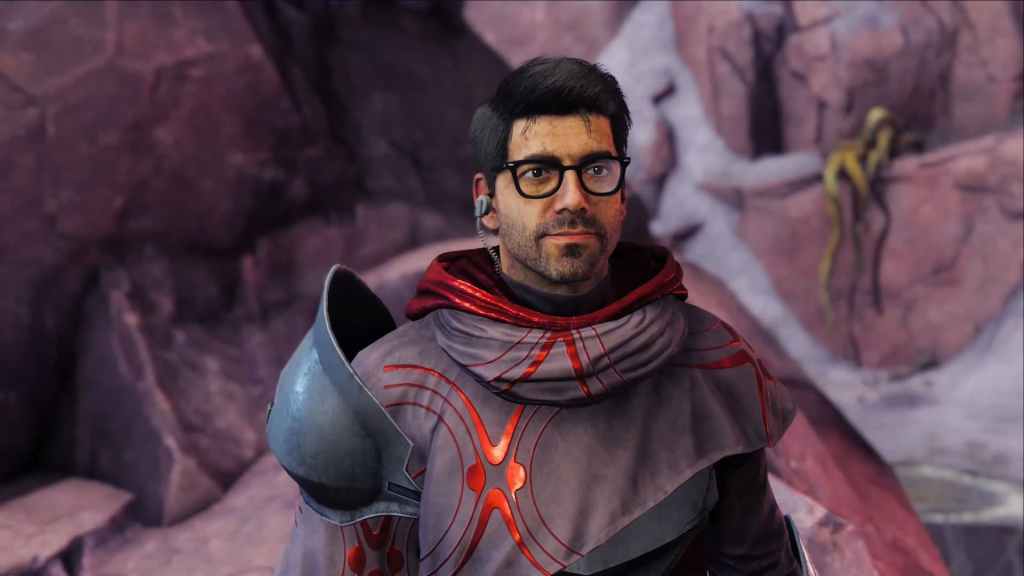
The Edge of Fate’s narrative feels distinct—more intimate and human in a way that’s typically been reserved for seasonal storytelling—while still laying the groundwork for the larger arc of the saga. It’s a fresh, much-needed shift for the franchise and one that has me seeking out answers.
Kepler, the Ionian Campus, and Destination Abilities
Kepler is the new featured destination in The Edge of Fate—a small planetoid located at the coordinates uncovered in one of Episode: Heresy’s questlines. It immediately sets an eerie tone with its reddish-brown canyons, overgrown industrial ruins, and a golden-green fungus known as dark matter creeping over everything. Scattered throughout the landscape are haunting remnants of humanity’s past—crashed ships, rusted scaffolding, flickering neon signs—all surrounding a mysterious civilization known as the Ionians. At the heart of Kepler lies the Ionian Campus, a hub space similar to the HELM where players can turn in quests, recover lost gear, and learn more about the science-driven inhabitants. Adding to their mystery, the Ionians have their own language, and deciphering it becomes a key narrative mechanic—unlocking new puzzles, hidden chests, and previously inaccessible areas across Kepler.
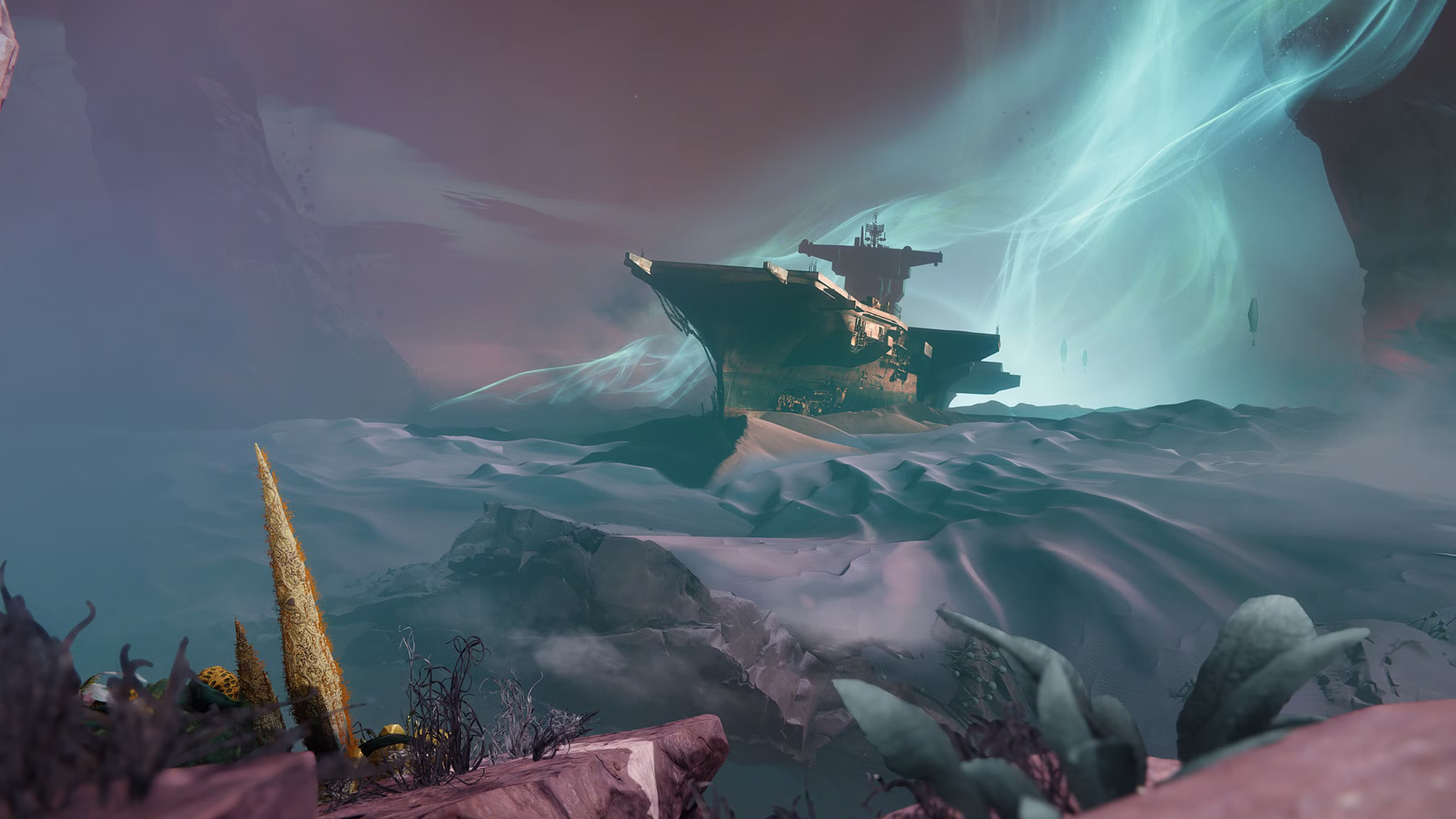
In terms of design, Bungie has fully embraced a Metroid-inspired approach, with clear influence from Nintendo and Retro Studios’ Metroid Prime series. Kepler’s zones are dense and intricately layered, packed with hidden paths, environmental puzzles, and secrets accessible through learning the Ionian language and accessing the new “destination abilities”—temporary powers that fundamentally reshape how you explore and interact with the world.
These abilities—Matterspark, Relocator Cannon, and Mattermorph—add a unique twist to traversal, combat, and puzzle-solving. Matterspark lets Guardians transform into a fast-moving Arc energy form to zip through tight spaces and activate hidden mechanics. Relocator Cannon enables short-range teleportation, opening up new routes and shortcuts. Mattermorph, my favorite of the three by far, taps into Strand, allowing Guardians to build platforms or manipulate parts of the environment in clever ways.
As interesting as these abilities are, they’re not without their flaws. At times, they can feel forced or overused, disrupting the pacing rather than enhancing it. Matterspark, in particular, feels awkward early on—I found myself stuck more than once due to unclear visual cues or overly hidden entry points. Controlling Matterspark could also feel tighter, as I often need to predict my movements instead of naturally feeling them. Some puzzles dragged on longer than they needed to, with minimal payoff. Still, the underlying design is strong, and when everything comes together, the experience is genuinely rewarding. Kepler is genuinely one of the most creatively designed spaces Destiny has ever delivered.
Difficulty Settings, World Tiers, and The Portal
The Edge of Fate introduces some of the most best design changes Destiny has seen in years, with the World Tier system standing out as a particularly strong addition. This new structure allows players to scale the game world’s difficulty, offering clear reward tracks at each level—similar to the system I loved in Outriders. There are four tiers in total: Brave and Legendary are available from the outset, while Fabled and Mythic unlock upon completing the campaign. I chose to play through the campaign on Brave for my initial solo experience, but I plan to revisit the higher tiers as others in my regular fireteam progress. The World Tier system is something I wish Bungie had implemented years ago. It’s a smart, flexible system that enhances replayability and feels like a natural evolution for the series.
Another great—and honestly surprising—improvement is the Portal, a streamlined menu system that unifies Destiny’s content into clear categories, making it easier for Guardians to choose how they want to pursue endgame gear. Solo Ops offers curated solo missions, Pinnacle Ops focuses on weekly reward drops, and Crucible Ops handles PvP activities. While there’s still room for improvement—especially as more content is added over time—this first iteration is a strong start. It’s made my experience noticeably smoother and more engaging. Any change that means more time playing and less time scrolling through menus is a win, especially when my game time is limited.
Armor 3.0 and a New Arsenal of Weapons
I haven’t spent enough time with it to speak for those deep in the endgame grind, but Armor 3.0 absolutely deserves praise. It’s a sleek, intuitive system built around clearly defined stats, build archetypes, and tiered armor sets. Synergies between class abilities, gear, and weapons are easier than ever to understand, making builds quicker to assemble—yet it still offers the depth and flexibility that dedicated min-maxers expect. I lost count of how often I confused Intellect and Discipline, but now the stats are clearly labeled. Seeing “Super,” “Melee,” and “Grenade” spelled out makes it obvious what I’m building toward, and that small change has made a big difference.
In addition, armor sets now come with two-piece and four-piece bonuses, granting extra stat perks when multiple pieces from the same set are equipped. It’s a smart addition that gives veteran players more room for buildcrafting while adding meaningful depth and strategy to endgame activities like raids, dungeons, and Crucible.
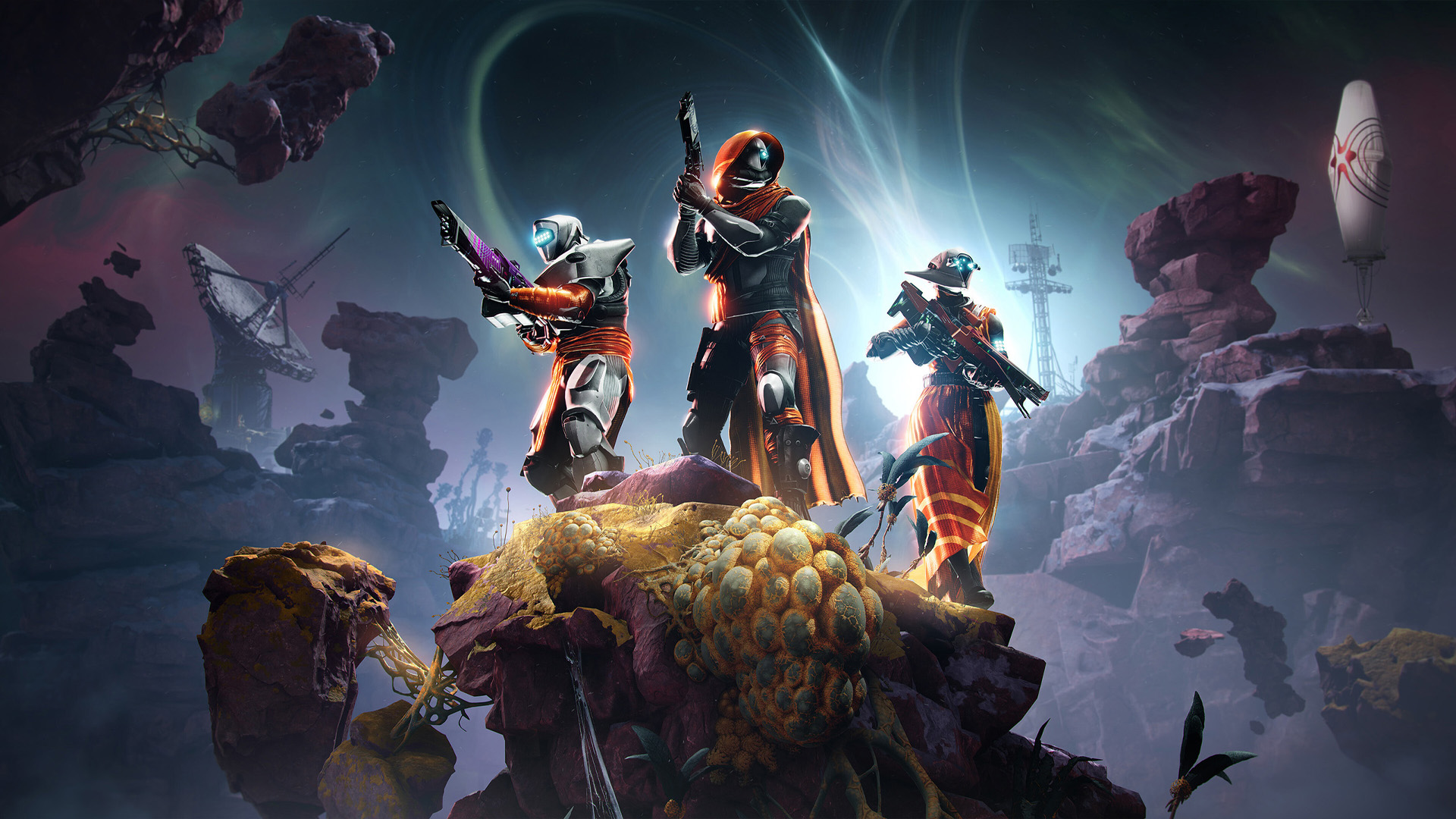
The weapons, meanwhile, are an absolute blast to use. With The Edge of Fate, I made a deliberate choice to play exclusively with new guns—pushing myself out of the comfort zone I’ve settled into for years, even though the expansion includes a curated selection of Featured Gear with perks. It turned out to be the right call, as I discovered several weapons I genuinely love.
The Exotic scout rifle Third Iteration is an instant standout—precise, punchy, and now a permanent fixture in my arsenal. Its cooldown mechanic fits my play style perfectly, functioning almost like a pump-action shotgun when the pace of combat doesn’t allow time for a reset. Speaking of shotguns, Precipial delivers a satisfying blast, though I do wish it had a larger magazine. The auto rifle Giver’s Blessing works great with Axium War Rig, while the scout rifle Sublimination, with the perk Explosive Payload, adds an extra rewarding pop on precision hits. Bungie has always nailed the feel of its weapons, and these new additions to the arsenal are no exception.
Final Verdict
In the end, The Edge of Fate feels more intimate, mysterious, and experimental than Destiny has in years. It wasn’t just another bombastic expansion of slaying gods or averting cosmic collapse—though those elements still lingered. At its core, the expansion was about choice, identity, and the unsettling question of whether our decisions had ever truly been our own. The stories of Ikora, Lodi, The Drifter, and Orin each brought something distinct to the experience—personal, layered, and genuinely engaging. Their journeys kept me invested, eager to learn more, and gave me a reason to keep fighting until the very end.
Considering everything Bungie has endured over the past few years, they could have played it safe—delivering a modest reset just to keep the gears turning. Instead, they took a creative leap. What we got was something bold, emotional, and deeply personal. For a game that had always asked us to believe in something greater, The Edge of Fate is one of Destiny 2’s most compelling expansions in years—and undoubtedly the one it needed.
Boss Rush Network gives Destiny 2: The Edge of Fate campaign, story missions, and side quests 5/5 stars.
Featured Image: Bungie Press Room
Tower Casuals: The Destiny Podcast
Eyes Up, Guardians! Tower Casuals: The Destiny Podcast is Boss Rush Media’s podcast dedicated to the Destiny franchise and tangentially Bungie and their other projects. Each week, host Corey Dirrig, his cohost Josh Finney, and the Tower Casuals Clan of misfits discuss the latest in the realm of Destiny, including new story beats, the weekly TWAB, in-game events, weapon and armor changes, lore, and more. Catch Tower Casuals every Friday morning on YouTube and your favorite podcast service.

Listen or Watch Tower Casuals: The Destiny Podcast:
Apple Podcasts | Spotify | Amazon Music | Overcast | YouTube | Anchor
Join the Tower Casuals Discord: Tower Casuals Discord Server
Join the Boss Rush Discord: Boss Rush Network Discord
Follow and Contact Tower Casuals:
towercasuals@gmail.com
Follow and Connect:
X/Twitter | Threads | Instagram
Corey Dirrig is the Founder and CEO of Boss Rush Media, and the President of The Boss Rush Network. He is the Host of The Boss Rush Podcast, Tower Casuals: The Destiny Podcast, and cohosts a variety of other podcasts and content. You can connect with Corey on X/Twitter, on Threads, and on Instagram. You can also connect with Corey on LinkedIn for Business Inquiries.
*DISCLOSURE: I received an Xbox Series console code for The Edge of Fate and its subsequent Annual Pass for The Year of Prophecy from Bungie. I am also friendly with some current and past Bungie employees. As always, being open and honest with our audience is important to our integrity personally and as a company.
 Tower Casuals: The Destiny Podcast
Leave a comment